
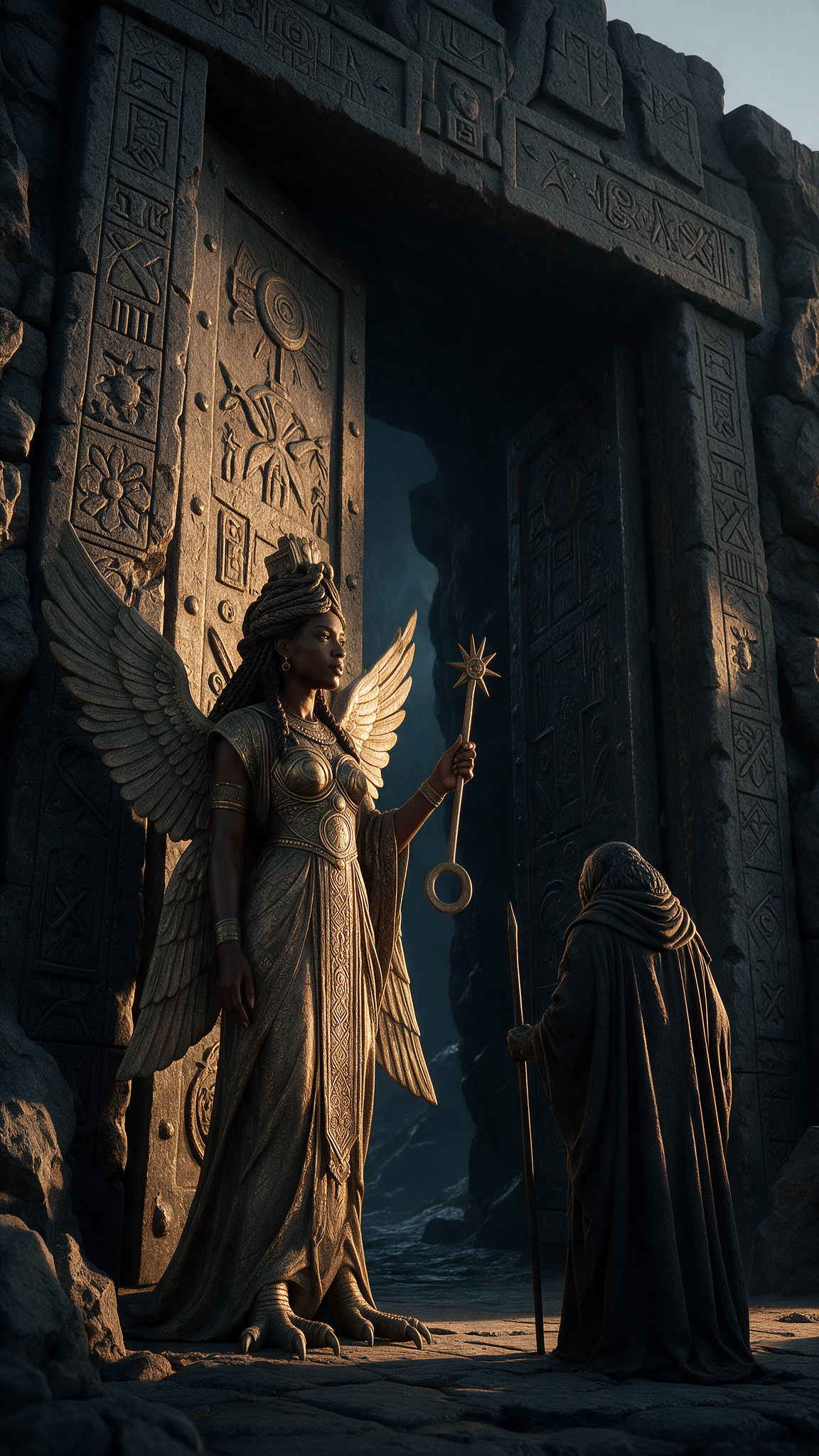
Becoming HER: The Descent and Return of Inanna
Some changes you choose. Some changes choose you.
A breakup. A burnout. A loss. A new chapter where your old strengths suddenly don't work anymore.
I went back to one of the oldest stories in the world to understand what it means to go down, and to come back up wiser.
It turned into seven gates, with questions that are simple to read and not so simple to answer.
Which one will you stop at?
"Becoming HER: The Descent and Return of Inanna" is now on iloveinspiration.nl
Some changes you choose. Some changes choose you.
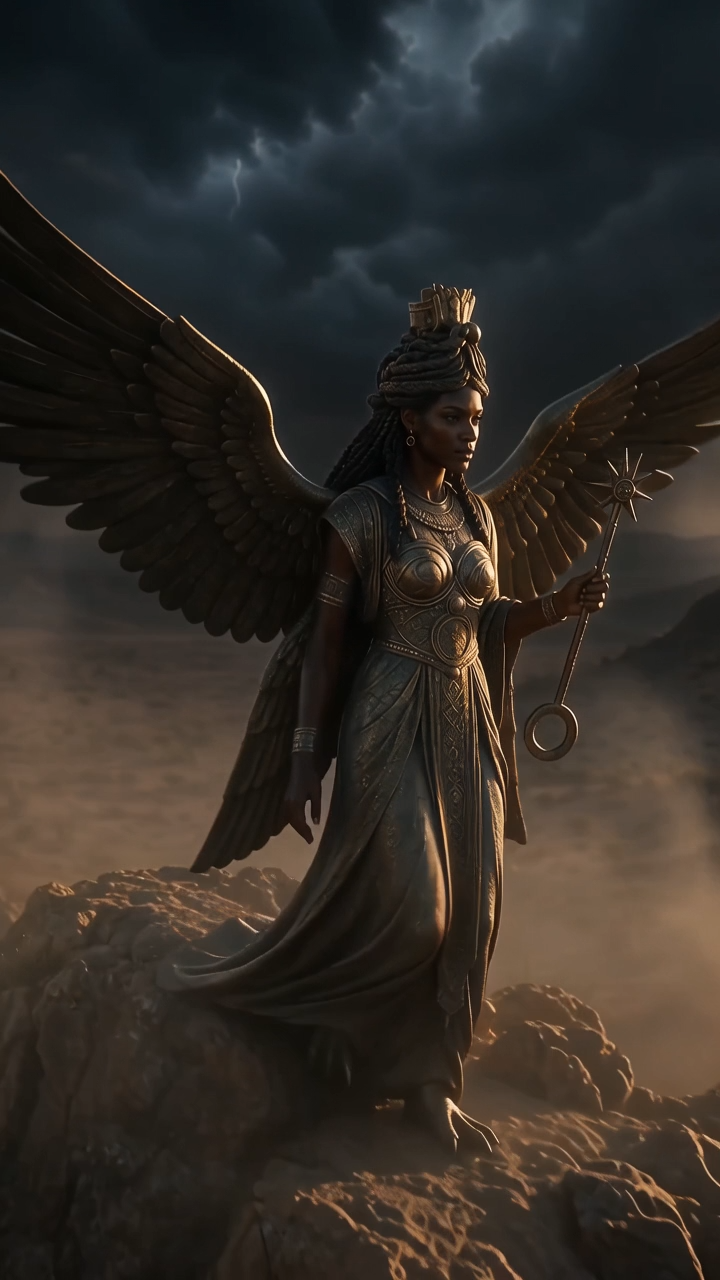
Recently I wrote about editing: about taking things away, and asking what can go. Sometimes life asks us to let go of something, or to try a new role. And sometimes life takes things from us without asking, through a death, a breakup, a burnout or a loss. When I thought about this, I thought of a very old story. It is the story of the goddess Inanna, Queen of Heaven and Earth, and it is about 4,000 years old.
The goddess of love and war
Inanna had everything. She was loved by the people of her city, Uruk. She had temples, lovers and power. She was the goddess of love and war. Not love on some days and war on other days. Both at the same time, as one power. The people of Sumer even called battle "the dance of Inanna." A priestess named Enheduanna, the first poet in history whose name we know, called her Lady of all the me.
The me (you say it like "may") were divine powers. They were the rules that make the world work the way it does. Inanna collected them the way I collect notebooks.
The people of Sumer also saw her in the sky. Inanna was the planet Venus, the brightest light in the night after the moon. Her sign was an eight-pointed star. And Venus also has two faces. For months she shines after sunset as the evening star. Then she disappears. And then she comes back before sunrise, as the morning star.
One day Inanna turned her attention to the Great Below, the underworld, the land of the dead. Her older sister Ereshkigal was queen there. Ereshkigal's husband, the Bull of Heaven, had died, and Inanna decided to go down for the funeral.
Nobody who went down had ever come back. She went anyway.
She dressed for it
Before she left, Inanna put on everything that made her a queen: her crown, called the crown of the open plains, a necklace of blue stones, a double row of beads across her chest, a breastplate (a piece of armour for the chest), a gold ring, a blue measuring stick, and her royal robe. These things were her me, her divine powers, in a form she could wear. She took her powers with her.
This feels so familiar. When we walk into something scary, we often wear our armour too. The things that give us confidence. Our best outfit. Our job title. Our reputation. We bring the version of ourselves that has everything under control.
She also did one very smart thing. She told her friend Ninshubur: if I'm not back in three days, go and get help.
Seven gates
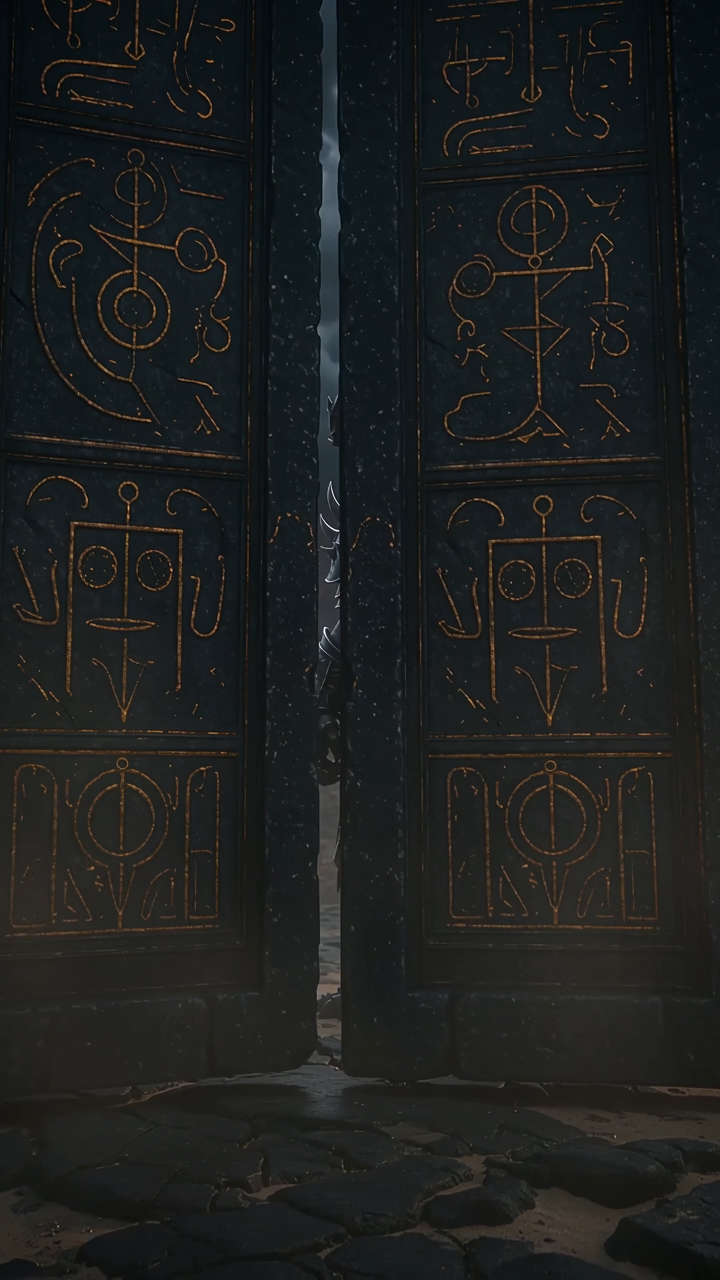
When Inanna reached the first gate, she knocked hard and called out: open the door! The gatekeeper, Neti, asked who she was. And he asked why she had come to the land that no one comes back from. For the funeral of my sister's husband, she said.
Neti went to tell his queen. When Ereshkigal heard that her sister was at the gate, dressed in all her power, she became very angry. Then she gave Neti an order. Lock all seven gates. Open each one only a little. At every gate, take something from her. Let her come in bent low.
Because the queen of the underworld would not let the queen of heaven walk into her world with all her power on.
And because each door opened only a little, Inanna had to bend down to pass through. At every gate, something was taken. At every gate she asked: what is this? And each time the answer was the same: this is how things are done in the underworld, and you may not ask about it.
The word for "how things are done" there is also me. So the gatekeeper is really saying: down here, other rules apply. Your powers from up there don't work here.
That made me think. Because every time we start a new part of life, some of our old powers simply stop working. All the charm that helped you in your twenties. All the activity you showed, which impressed everyone at your last job. They were real powers. But this is a different world, with different rules.
Here is what she lost at every gate, and what I think it looks like in our lives today. There are so many ways to look at this, but I will focus on this path.
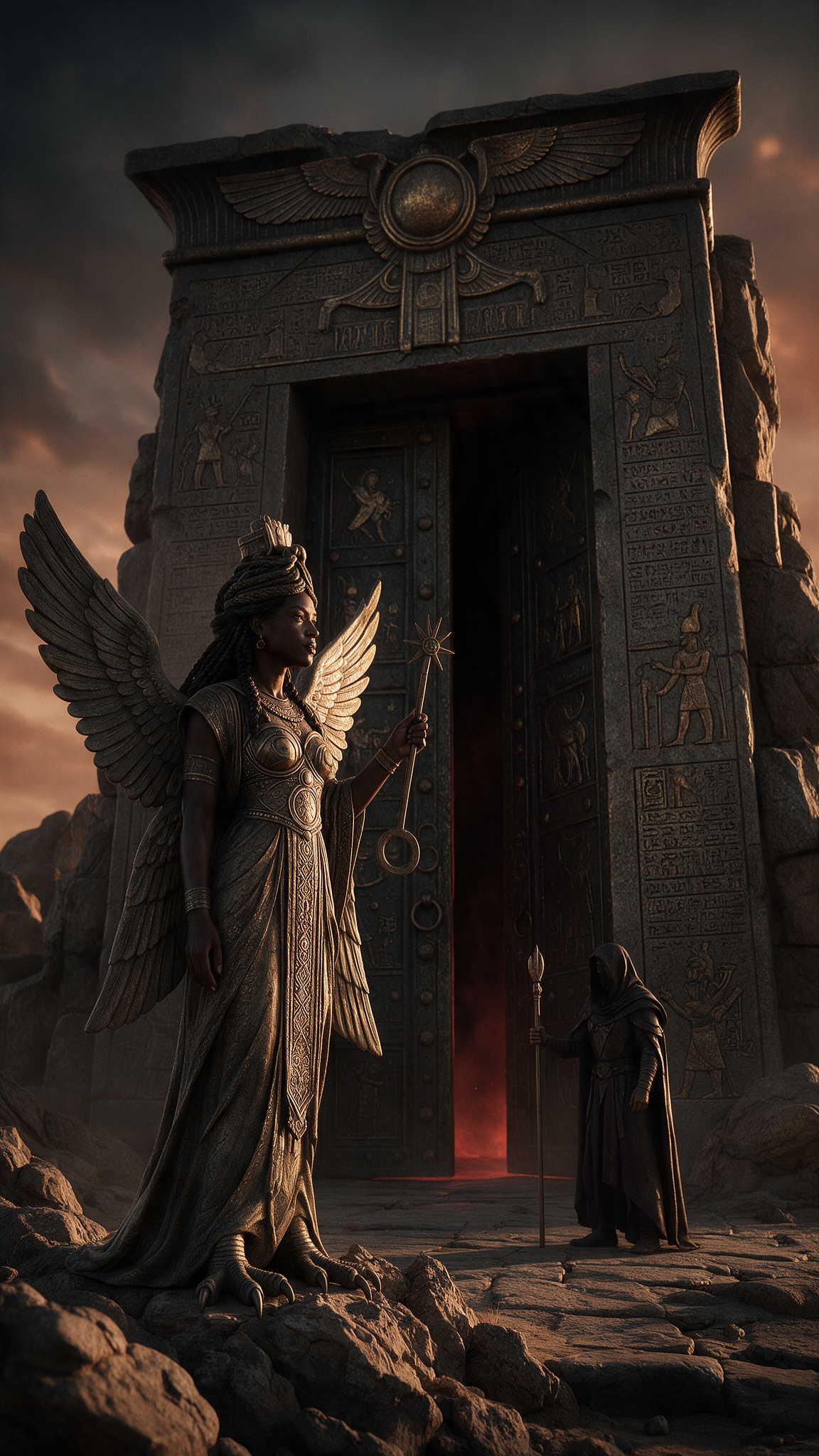
The Descent
At the first gate, the gatekeeper took her crown. This is your title and your status: your job, your role in the family, the name people know you by. They are real, and you worked for them. But in a new part of life, they may not open doors anymore. Maybe you notice how much of your week you spend being a title. Or you meet someone new and talk about yourself without mentioning your job, and see what is left.
At the second gate, the gatekeeper took her necklace. This is your voice. And sometimes our voice has become the things we say to be liked, and the opinions we picked up from our parents, our friends or our phone. If you listen to yourself for a few days, some sentences will sound a lot like someone else.
At the third gate, the gatekeeper took the beads across her chest. This is your heart, and everything you carry in it for other people: their hopes for you, their approval, their idea of who you should be. It is also the ways you make yourself small to keep others comfortable. Whose voice is the loudest in your heart? You don't have to do anything with the answer yet. Knowing is already something.
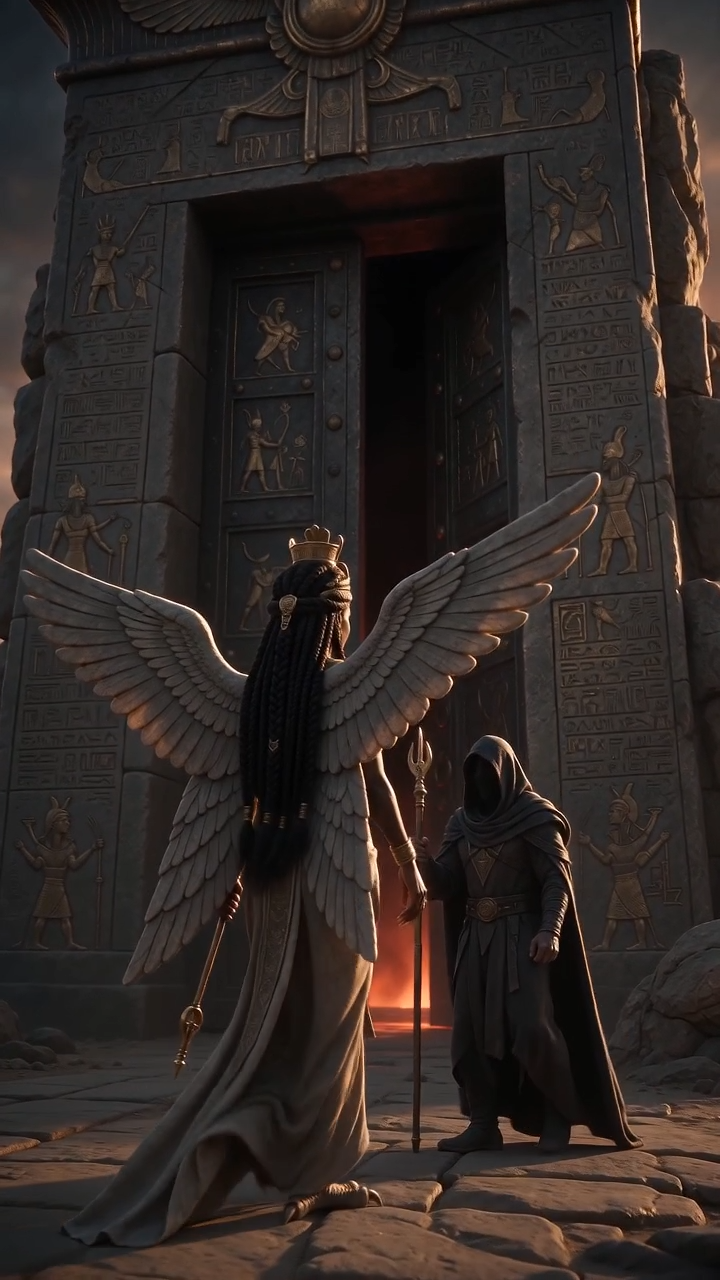
At the fourth gate, the gatekeeper took her breastplate. This is how you protect yourself. For some of us, that is charm: always being nice, always looking good, so nobody can say anything bad about us. For others, it is the opposite: staying quiet and plain, so nobody notices us. Both keep us safe. Both have a price.
At the fifth gate, the gatekeeper took her golden ring. These are your friendships and promises. The friend you still see only because you have known each other since school. The group chat you never left, because leaving would be noticed. Some of these bonds are still active. Others you only keep because you always have.
At the sixth gate, the gatekeeper took her measuring stick. This is how you measure yourself: against other people, against your younger self, against where you think you should be by now. Maybe you catch yourself in the middle of comparing, and you simply say to yourself: put it down.
At the seventh gate, the gatekeeper took her royal robe. This is the whole story of who you think you are. I'm the strong one. Everyone needs me. I'm too much. I spend too much. I always have to keep it together. These sentences are like clothes, and some of them don't fit anymore.
I don't think any of these things were false. But maybe, by the time we go down, we have been using them in only one way. Love has become trying to please everyone., and war has become hiding behind armour.
After seven gates, Inanna came into her sister's throne room bent low, with no clothes and nothing left.
But the story doesn't end here.
The other queen
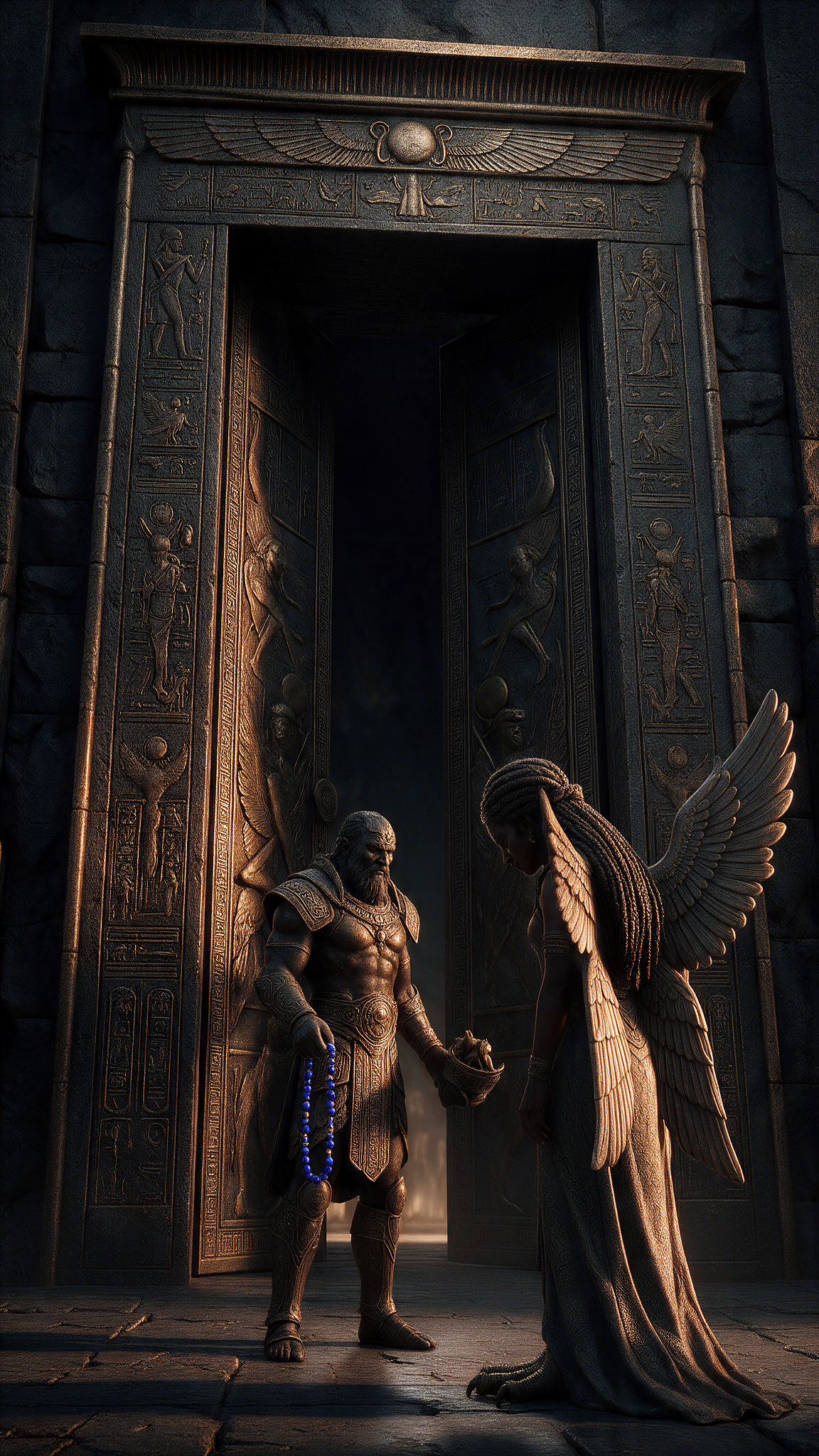
Ereshkigal was not a monster waiting at the bottom. She was a queen, with her own throne and her own rules. She had just lost her husband, and she was in great pain. The old story describes her pain in a way that makes many readers think of a woman giving birth: a queen carrying death and new life at the same time.
There are different versions of the old story, and in one of them, Inanna does not stay bent low. With no crown, no robe and no power left, she walks to her sister's throne, makes Ereshkigal stand up, and sits on it herself. Even with nothing left, she is still the goddess of war.
But this is not her world. The seven judges of the underworld, the Anunna, looked at her. It was the look of death. Inanna died, and her body was hung on a hook.
One day went by. Then a second day. Then a third.
The true friend
Up in the world above, Ninshubur waited. When Inanna did not come back, Ninshubur did not forget her promise. She cried for her friend in the streets and in the temples, the way people did when someone died. And then she went to ask for help.
She went to the first great god and asked him to save Inanna. He said no. Inanna wanted too much, he said. Whoever goes down there does not come back.
She went to the second great god. He said the same thing: no.
She could have stopped there. Two of the most powerful gods had said no. But she went to a third one: Enki, the god of wisdom. And Enki was worried. What has she done? he asked. What has happened to her? And he said yes.
The two small beings
From the dirt under his fingernails, Enki made two very small beings. He gave them the food of life and the water of life, and he sent them down. They were so small that they slipped through the gates like flies.
When they reached the bottom, they found Ereshkigal in pain. They did not fight her. They did not argue with her rules. They did only one thing: when she cried out, they cried out with her. When she said "oh, my heart," they said "oh, your heart." They simply felt her pain together with her.
And for the first time, the queen of the underworld felt that someone truly saw her.
She was so moved that she wanted to thank them. She offered them a river full of water. They said no. She offered them a field full of grain. They said no. They asked for only one thing: the body on the hook.
She gave it to them. They sprinkled the food of life and the water of life over Inanna. And Inanna rose.
So Inanna was not saved by force. She was saved by a true friend who kept asking, even after two gods said no. And by two small beings who knew how to stay with someone in pain.
Here the old story goes quiet
The myth tells us that Inanna came back to life and returned to the world above. But it does not tell us how she got her crown, her beads and her robe back. It does not tell us what it felt like to walk up through the seven gates.
The sky, though, tells us something. Every year and a half or so, Venus moves so close to the sun that we can't see her anymore. She passes between the earth and the sun, and she is gone for a while. When she comes back, she has changed sides: she was the evening star, and now she is the morning star. Many readers see the story of Inanna in this. The myth itself doesn't say so. But I still see her there.
So this is where I leave her story and step into yours. What follows is not from the myth. It is a practice I made from it: seven gates for you to walk back up after descending and dying to half-versions of yourself.
The Return
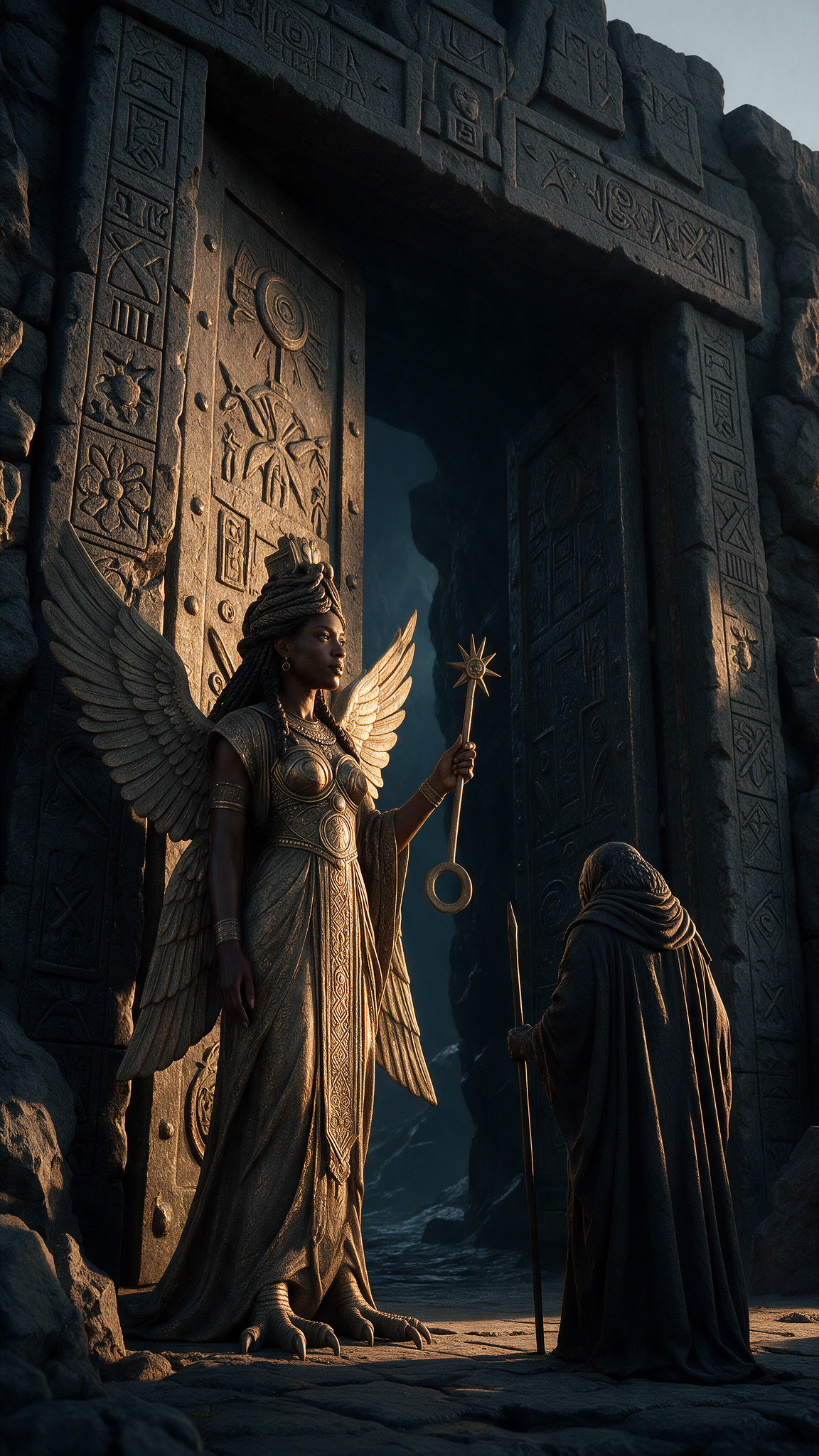
At each gate, you take back one of your powers. And you take it back with both faces: love and war.
Gate 7 - You take back your robe. This is the story of who you are. On the way down, maybe this story made you small, or you hid behind it. On the way up, love says: I am good enough as I am. War says: and nobody gets to change my story.
What do you say about yourself that you would never say about a friend? And who wrote the story you tell about yourself?
Gate 6 - You take back your measuring stick. On the way down, you measured yourself against everyone else. On the way up, love measures kindly: it sees how far you have come. War measures clearly: it knows what is not good enough for you anymore.
How far have you come that nobody knows about? And what is not good enough for you anymore?
Gate 5 - You take back your ring. These are your friendships and promises. On the way up, love is loyalty: the people you would go to the underworld for. War is choosing the people on your side, on purpose.
If you disappeared for three days, who would come looking for you? And who would you go looking for if they went missing for three days?
Gate 4 - You take back your breastplate. On the way down, this was armour. On the way up, it becomes a door instead of a wall. Love opens the door for the right people. War keeps it closed for everyone else. That is what a boundary is.
Does someone have a key to you that shouldn't have one?
Gate 3 - You take back the beads across your chest. This is your heart. Love is softness. War is courage. They live in the same place for a reason.
Where are you brave for other people, but not for yourself?
Gate 2 - You take back your necklace. This is your voice. Love is sweet words: the words that make someone feel seen. War is the loud, clear voice: the "no," the "that's not okay".
Who deserves a kind word that you have never said out loud? And which sentence have you been swallowing for too long?
Gate 1 - You take back your crown. This is the last one: your power to rule your own life. Being loved and being in charge, at the same time, without choosing between them. You have already earned it. You only have to put it on.
What have you earned that you still don't claim?
And then you step out into the light. You are wearing everything you wore on the way down, but you wear it differently now. Like the morning star: the same planet, back from the other side of the sun, rising before anything else. Both, at the same time. Be soft when softness calls, and be strong when you refuse to take shit. Be the lover and the warrior.
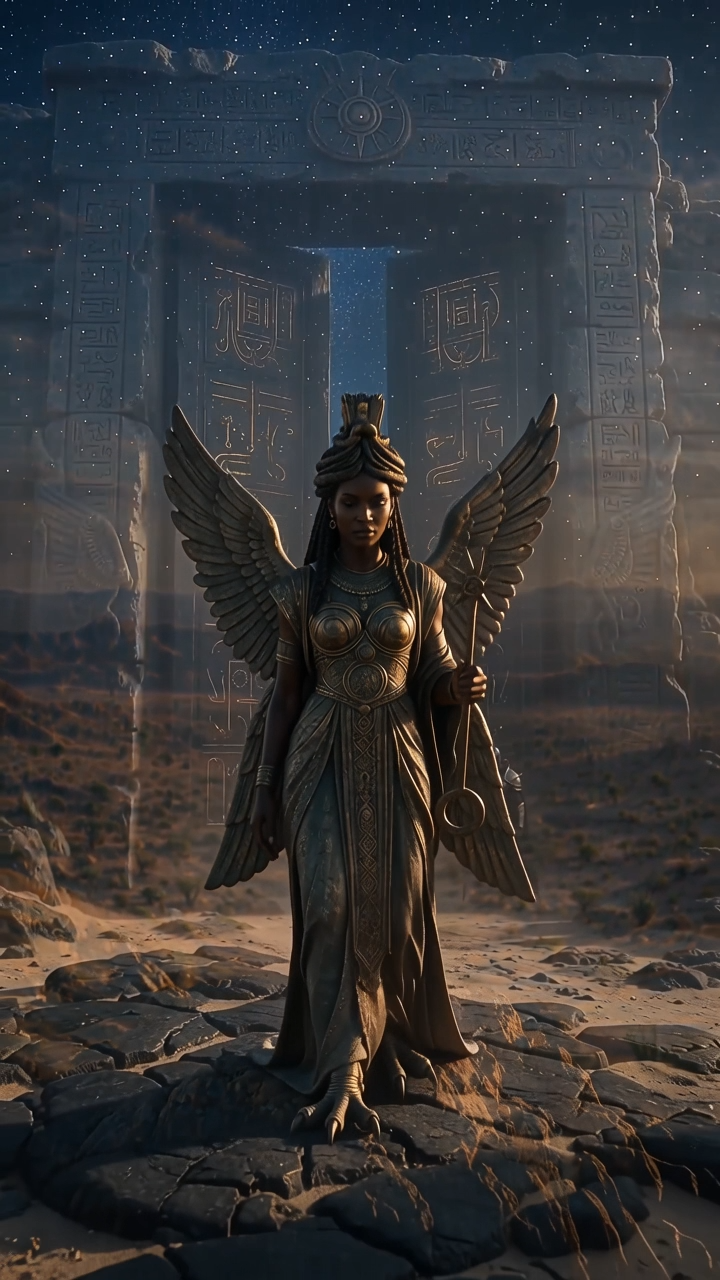
Inanna is both. That is her whole power: Lady of all the me, love and war in one. I don't think the way down is meant to take away who we really are. I think it takes away the half-versions of ourselves, so that on the way back up, we can take back the whole thing.
You don't have to walk through all seven gates at once. And you don't have to walk back up all at once either. Some changes you choose. Some changes choose you. But how you come back up, and what you take with you, is yours. So, check the gate you're standing at right now. And ask yourself: what did you give away that you want to take back?
Love,
Gloria