Becoming HER: The Edit
A Lot of Becoming is Editing
We talk about personal growth as if the answer is always more.
More discipline. More confidence. Better habits. A stronger routine. Another notebook, because apparently in this one I might finally write down the answers I need.
And yes, adding things can help.
But lately I am much more interested in subtraction.
What can go? What am I actually done with?
Maybe it is a habit I barely notice. An ambition I was serious about. Or saying yes too quick. Or holding on to a goal, because I already announced it to people.
Maybe something much smaller, like a subscription I keep forgetting to cancel.
None of it has to be dramatic. Sometimes it is just old stuff still running. Some things do not need improving. They need removing.

A lot of becoming is editing
Look at what's built up around you, and inside you, and ask: does this still make sense?
Some of it's been there so long you don't even see it anymore. You just do it. React the same way. Keep the same rules. Make the same choices, on autopilot.
Meanwhile, your life has changed, but your behaviour is slower to catch up. Years later we call it a personality trait: That's just how I am. But the more honest sentence is: That's how I learned to survive.
Not quite the same thing.
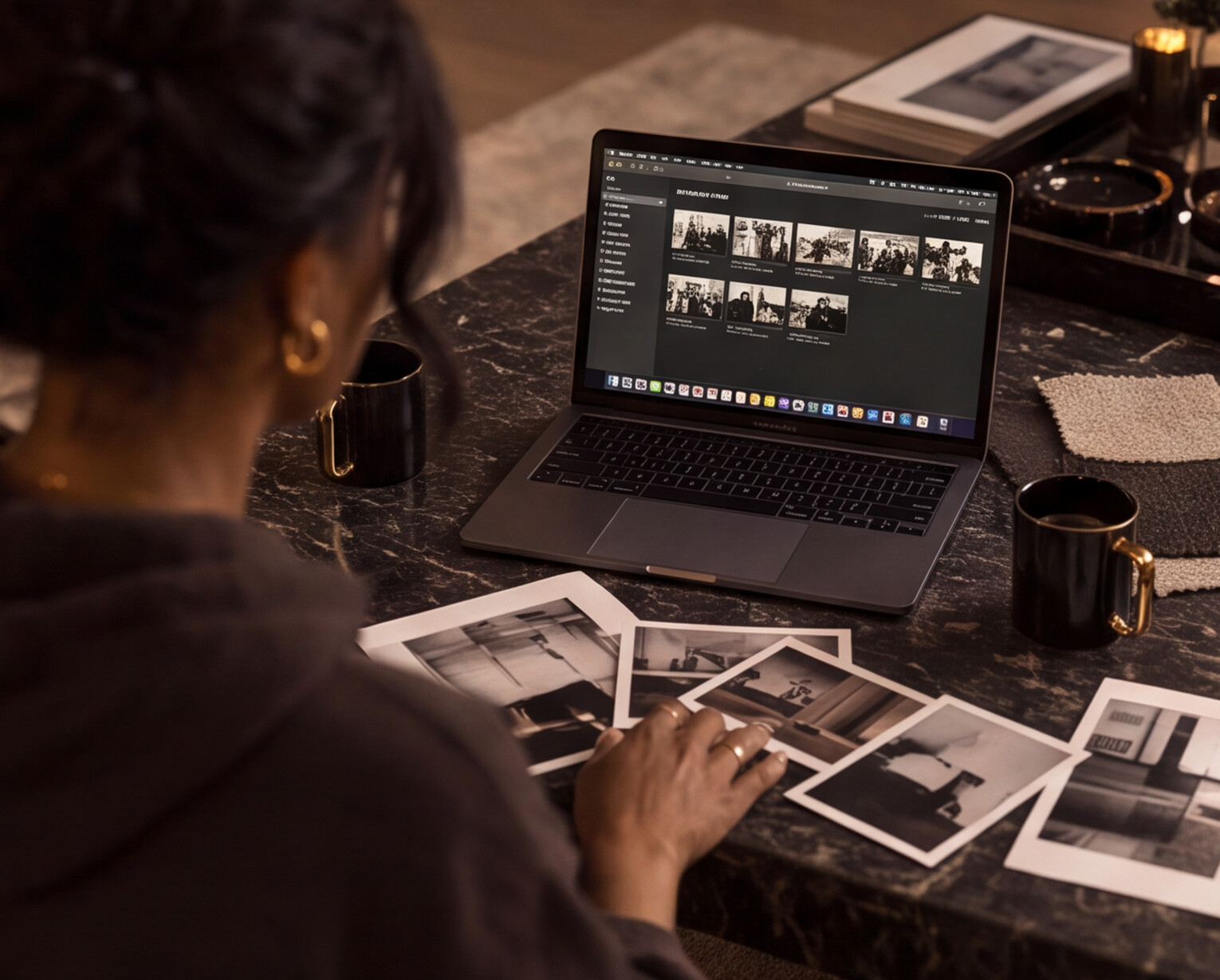
Everything that stays in your life needs some form of maintenance.
Then there is the upkeep. This may be the part we underestimate most.
Obviously, possessions do. You clean them, store them, repair them, move them around and occasionally spend an entire Saturday wondering why you own seven of them. But the same is true of less visible things.
Relationships need attention. Goals take work. Keeping up appearances is work too. And a one-hour commitment is never really one hour, is it? You think about it before, plan around it, and remember it at inconvenient moments when you are trying to do something else. That is the actual cost.
Attention is a cost. So is effort. So is having fifteen tabs open in your head while trying to concentrate on one.
So, it is useful to ask: Do I still want to maintain this?
Because keeping something is also a decision.

A practical edit
I don’t think the point is to create a perfectly edited life and then freeze it in place. We should revise when we feel the need to. Keep something for a while. Drop it later. Pick it back up if you want. Change your mind because you know more now.
There are practical benefits to doing this every now and then.
You stop spending money on things you hardly use. Your calendar contains fewer things you agreed to six weeks ago and already regret. You spend less time keeping in touch with people purely because you have known them for a long time, and you can drop a goal that no longer fits and use those hours for something you actually want to do.

Even getting rid of a few possessions means fewer things to clean, store, move and eventually wonder what to do with. And mentally, there is simply less admin. Fewer things to remember.
That does not mean constantly reviewing your entire life. That sounds exhausting too. But when something starts irritating you, costing too much, taking too much time or repeatedly making you think, Why am I still doing this? That is probably worth looking at.
Sometimes the answer will be: Because I still want it.
Fine.
And sometimes the answer will be: Actually, I have no idea.
Also useful information.
Editing your life, every now and then, simply means more of it is there because you'd still choose it. That's reason enough.
So look with fresh eyes. What are you keeping out of habit? What would you finally drop, and what would you make room for, now that you're not who you were when you built this?
Love,
Gloria