The Silent Conditioning That Divides Men and Women
The First Scripts We Ever Learn

Our Separate Worlds
When I was growing up, it was clear that certain toys belonged to boys and certain worlds were made for girls. My world consisted of dolls, Barbies and a Ken, a kitchenette, a sewing machine—everything that was considered normal for a young girl.
But looking back, I began to notice things I did not understand at the time.
At school, we once had an event where each child had to buy a small gift for someone else. We picked a name from a jar, and the name I drew belonged to a boy. In the Netherlands, we wrap these gifts in something we call a “surprise,” which means creating something around the gift itself.
So I made a large ghetto-blaster out of cardboard boxes. Not because I thought he would like it, but because I loved music so much that I ended up making something I would have wanted myself, only to give it away.
I knew that boy loved swords. I loved swords too. So I bought him a beautiful one and hid it inside the ghetto-blaster. He was happy receiving it, but the truth is that I wanted the sword for myself.
I also loved watching kung fu movies, but I only ever saw men doing kung fu. It never occurred to me that I could learn it too. Nothing explicitly told me I couldn’t, yet something held me back, as if it was not meant for me, as if stepping into that world would change how I was seen.
And it was not just kung fu. I watched boys play certain games and move through certain spaces, and although I was never directly excluded, those worlds did not feel available to me. By the time I saw women entering those spaces, it felt as though I had missed my chance.
Growing up, especially as both a girl and a person of color, I was already aware that entering spaces where I was not represented could come with consequences. So even without being told, I learned where I did and did not belong.
Before a child learns who they truly are, they are already learning who they are expected to be. And this happens quietly, through repetition—through the films they watch, the toys they are given, and the stories they hear over and over again.
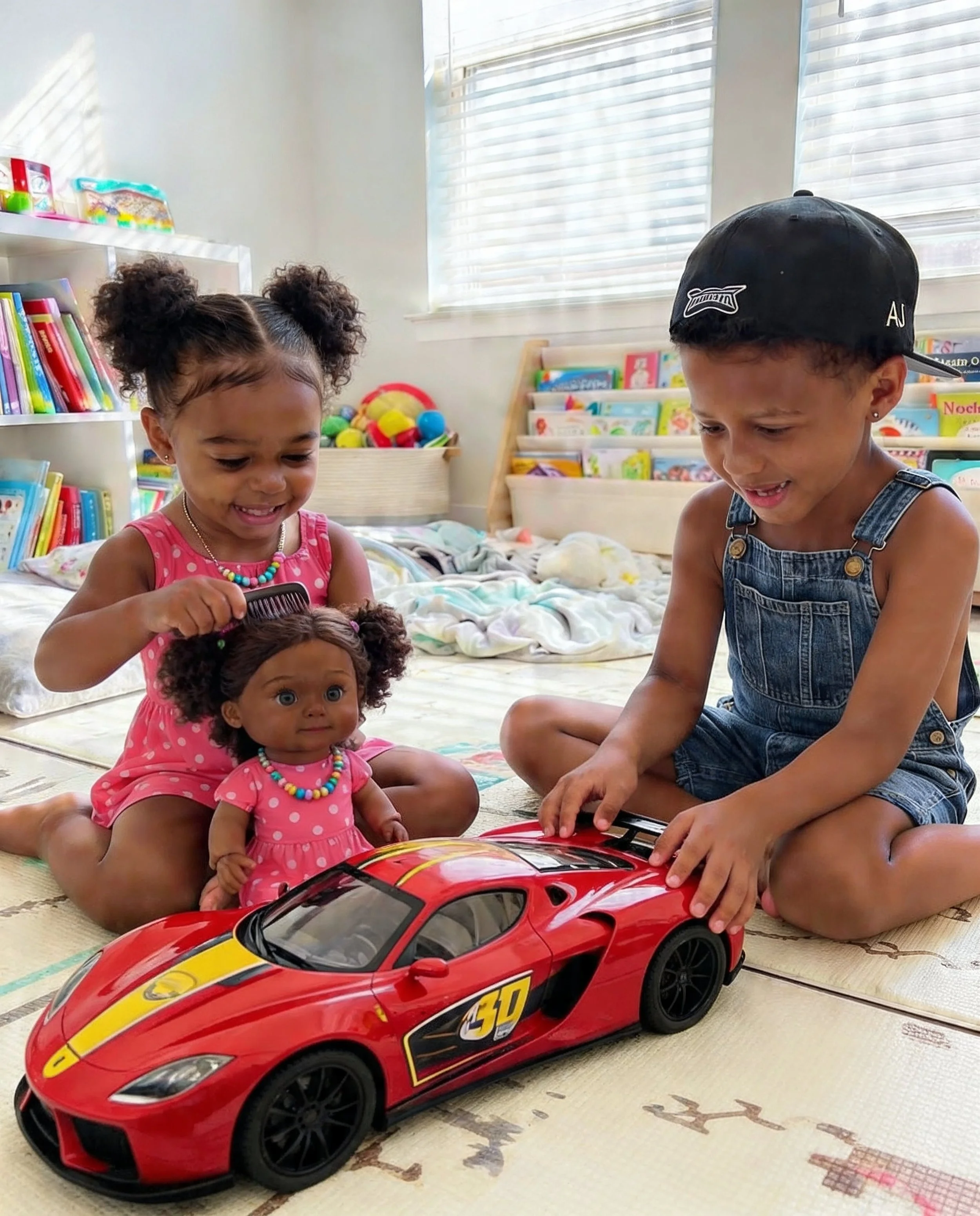
From an early age, boys and girls are guided into different worlds without any real acknowledgement of their individuality. Boys are often given action, competition, and stories about winning and saving the world, and in doing so, they begin to associate their value with strength, control, and action. Girls are often given dolls, beauty-related toys, and environments centered around care and connection, which guides them toward nurturing, appearance, and relational roles.
No one needs to explain these roles. The message is absorbed, and over time, it becomes normal.
When Two Worlds Meet
The real problem does not appear in childhood, but later in life, when these separate worlds meet.
When boys and girls grow into men and women, they often struggle to understand one another. It can feel as though they are speaking different languages, shaped by entirely different internal frameworks.
One may approach problems through action, while the other seeks understanding through conversation. One may focus on fixing, while the other focuses on feeling. This difference in itself is not the issue—both approaches hold value.
The problem is that most people are not taught both.
Many men grow up without learning how to understand or express their emotional world, while many women grow up without learning how to stand firmly in their own power. As a result, they meet each other without fully knowing themselves, and without access to the full range of what they are capable of.
The question, then, is not who is right or wrong, but why both boys and girls are not taught the full spectrum of what it means to be human.
The System Behind the Divide
This separation is not accidental. It is rooted in a larger system that has shaped society for generations: patriarchy.
Patriarchy does not only affect women; it affects men, children, and entire communities. It defines roles for both men and women, placing them in opposing positions, but ultimately disconnecting them from themselves and from each other.
Within this system, men are taught to act, to lead, to suppress vulnerability, and to prove their worth through strength and control. Women are taught to support, to nurture, to be desirable, and to maintain connection. In both cases, something essential is lost. Men become disconnected from their emotional world, and women become disconnected from their power.
Because these roles are reinforced through culture, tradition, media, and marketing, they begin to feel natural, even though they are learned. Society repeats what it has been taught, and companies sell what society recognizes, creating a cycle that sustains itself.
This is part of a broader structure in which people are separated, positioned unequally, and ultimately left incomplete.
The Ladder and the Circle
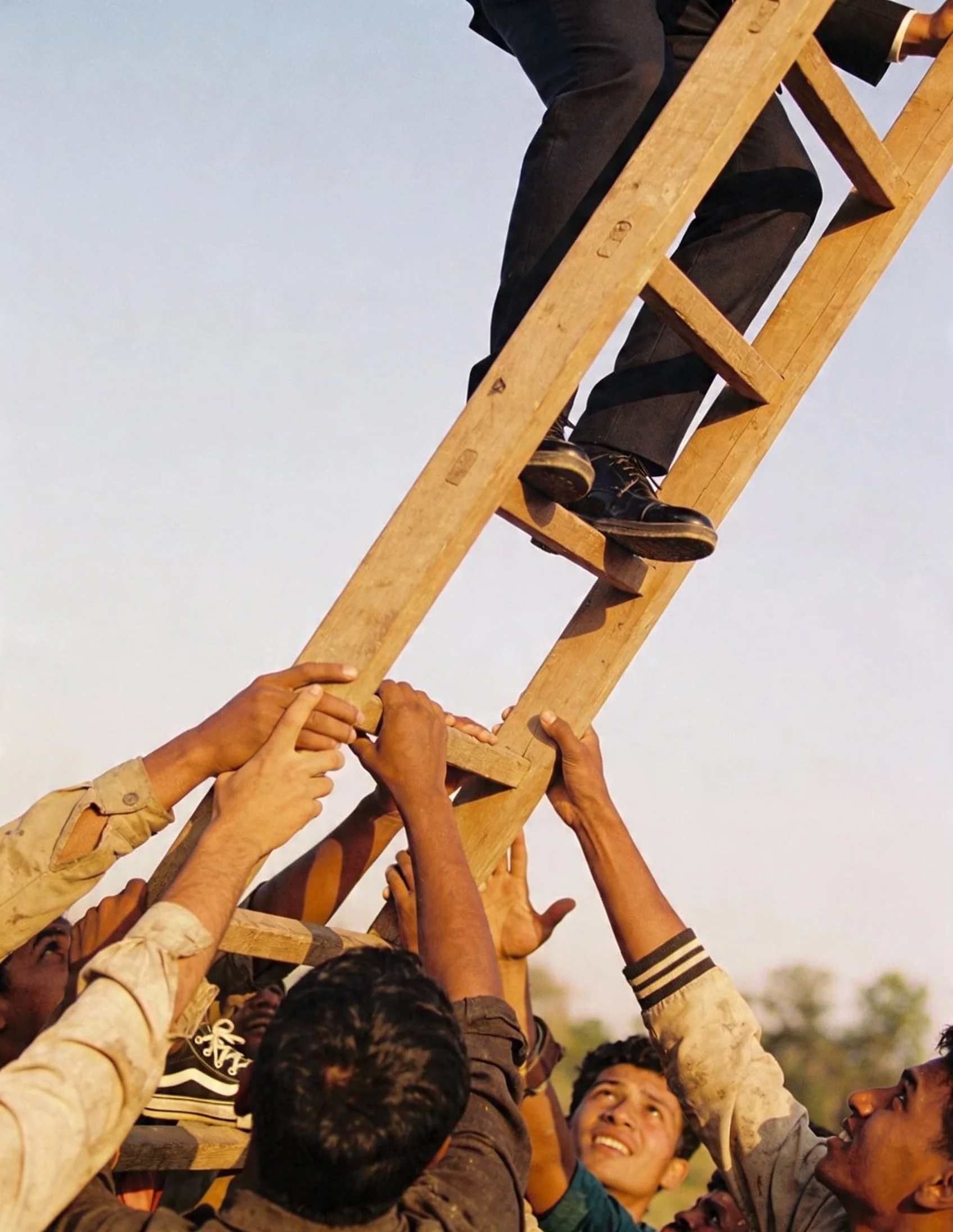
This structure can be understood as a ladder (or a line).
On this ladder, everyone is trying to climb higher, to create a better life, to reach something beyond themselves. But a ladder is not designed for connection; it is designed for upward movement, where space is limited and balance is fragile. One step forward can mean someone else falls behind.
Within such a structure, fear becomes inevitable.
The fear of losing your position, of being replaced, of not reaching the top. It creates a dynamic in which success is scarce, and survival can feel dependent on surpassing others.
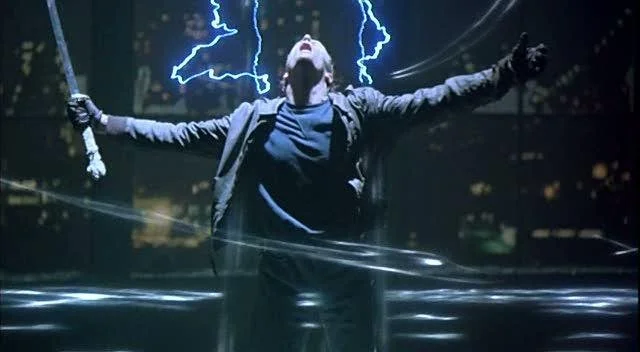
It echoes the idea that “there can be only one,” much like in the film Highlander (1986), where immortals are bound to eliminate one another until only one remains. In such a system, there is little room for shared existence or mutual growth, only competition and isolation at the top.
And yet, a ladder (patriarchy) cannot stand on its own. It requires support. That support is all of us - parents, teachers, communities - holding it in place while others attempt to climb. Over time, we not only support the structure, but begin to climb it ourselves, often in an effort to move away from what we perceive as the bottom.
But what if the bottom was never the problem?
What if the true elevation is not upward, but downward? Not in falling, but in returning. Because only on the ground can something stable be created. Something that does not need to be held up, and does not collapse.
The ground is the only place that does not move, and the only place that does not require balance. The ground carries the weight, life actually grows from it. And unlike the ladder, connection is possible on the ground.
The ladder teaches us to rise away from it, to see it as something to escape, yet everything real begins there. To be grounded is to be whole, to be in contact with self and others. From above, you may see far, but you cannot touch; you cannot build or hold. The higher one climbs, the further one moves away from what sustains life.
Perhaps the alternative is not to climb higher, but to return to the ground, to stand firmly, to move inward, and to recognize that what we search for has never been above us, but within us. As in Paulo Coelho’s The Alchemist, the journey outward often leads us back to what was already in us.
A Different Way Forward
There is a way forward, and it begins with awareness.
The moment these patterns become visible, they lose some of their control. With awareness comes the possibility of choice.
Children do not need to be confined to narrow roles; they need space to explore the full range of who they are. Boys should feel free to express emotion and care, and girls should feel free to explore strength and independence.
What is needed are new examples; not the familiar extremes of the strong, dominant man or the nurturing, accommodating woman, but individuals who embody both. A woman who is soft and powerful, and a man who is strong and emotionally aware.
The world is already asking for this shift. It asks men to become more open and aware, and women to become more grounded in their autonomy and power.
What If We Taught the Full Human Experience?
If children were taught the full spectrum of the human experience, much would change.
Emotions would not be seen as something to suppress or control, but as signals to understand. Children would learn not only what they feel, but why they feel it. They would recognize that anger can be connected to hurt, and that withdrawal can stem from fear.
A boy would not feel the need to hide his sadness, and a girl would not feel the need to soften her anger. Both would understand that these experiences are part of being human, not traits assigned to gender.
From this foundation, relationships would deepen. Communication would become more honest, with less assumption and more understanding. Conflict would still exist, but it would become more constructive, shaped by awareness rather than disconnection.

Conflict would also look different. Instead of one person trying to fix and the other trying to be heard, both would have access to both approaches. They would know when to act and when to pause, when to speak, etc. This balance would not remove conflict, but it would make it more constructive, less destructive.
Workplaces would shift as well. Leadership would no longer be defined only by control or dominance, but also by awareness, empathy, and clarity. Teams would function with more trust, because people would not be disconnected from themselves. Creativity would grow, because individuals would not feel limited to one way of thinking or being.
Parenting would naturally evolve. Parents who understand the full range of human emotion would pass that awareness on to their children. Instead of repeating patterns, they would have the ability to choose differently. Children would not be shaped into roles, but supported in becoming themselves.
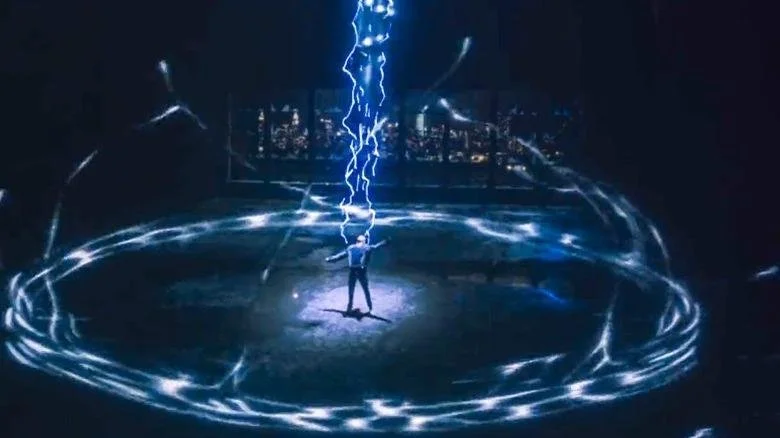
From Division to Wholeness
Even the way people see themselves would change. Many adults today spend years trying to reconnect with parts of themselves they were taught to ignore. In a world where children are allowed to develop fully from the beginning, that disconnection would be much smaller. People would move through life with a stronger sense of identity and inner stability.
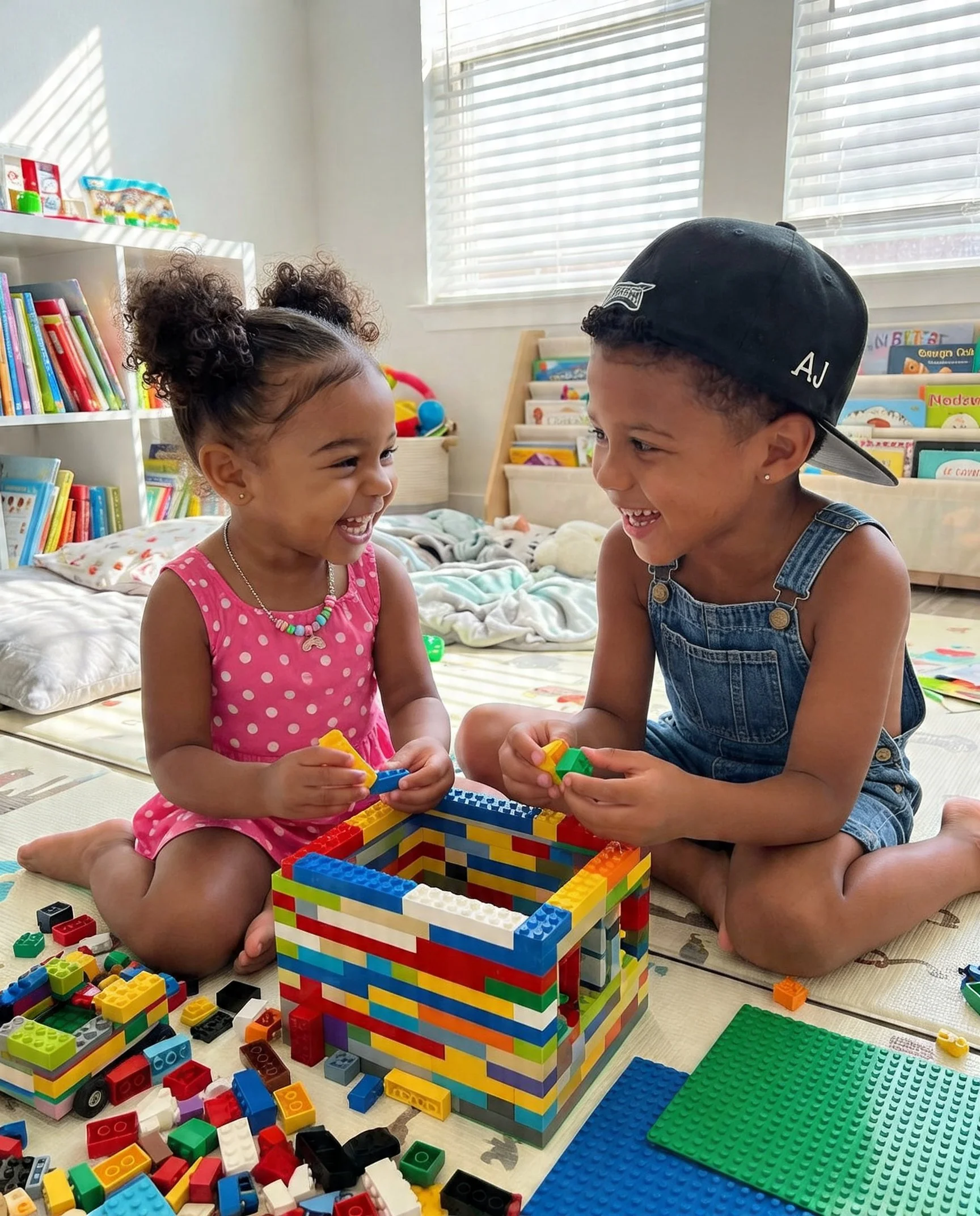
Play would also take on a new meaning. Toys would no longer separate children into roles, but invite them into different experiences. A child could build, care, explore, create, and imagine without limits. Through this, they would develop a wider range of skills and ways of thinking, which would carry into adulthood.
Over time, this would create a society where people are less divided within themselves, and therefore less divided from each other. When someone is not forced to choose between strength and sensitivity, between logic and emotion, they become more complete. And when individuals are more complete, the connections between them become stronger.
This kind of world would not be perfect. There would still be challenges, differences, and disagreements. But those differences would not feel like barriers. They would feel like something that can be understood and worked through.
In the end, the biggest shift would be this: people would not meet each other as opposites trying to figure each other out, but as whole human beings who already understand the language of both strength and feeling, and so much more.
Conclusion
The tension between men and women is often treated as a personal issue, but it is deeply systemic. Patriarchy has shaped both sides, placing them into incomplete roles that limit their ability to understand themselves and each other.
If we move away from raising boys and girls in separate worlds, and instead support them in becoming whole human beings, we begin to break that cycle. Then people will not meet as opposites trying to figure each other out.
They will meet as equals, grounded in both strength and feeling, action and awareness, power and connection.
And from that place, they will raise a generation that no longer has to heal from what it was never allowed to become.
Love,
Gloria