
P. Diddy, the Wizard of Oz
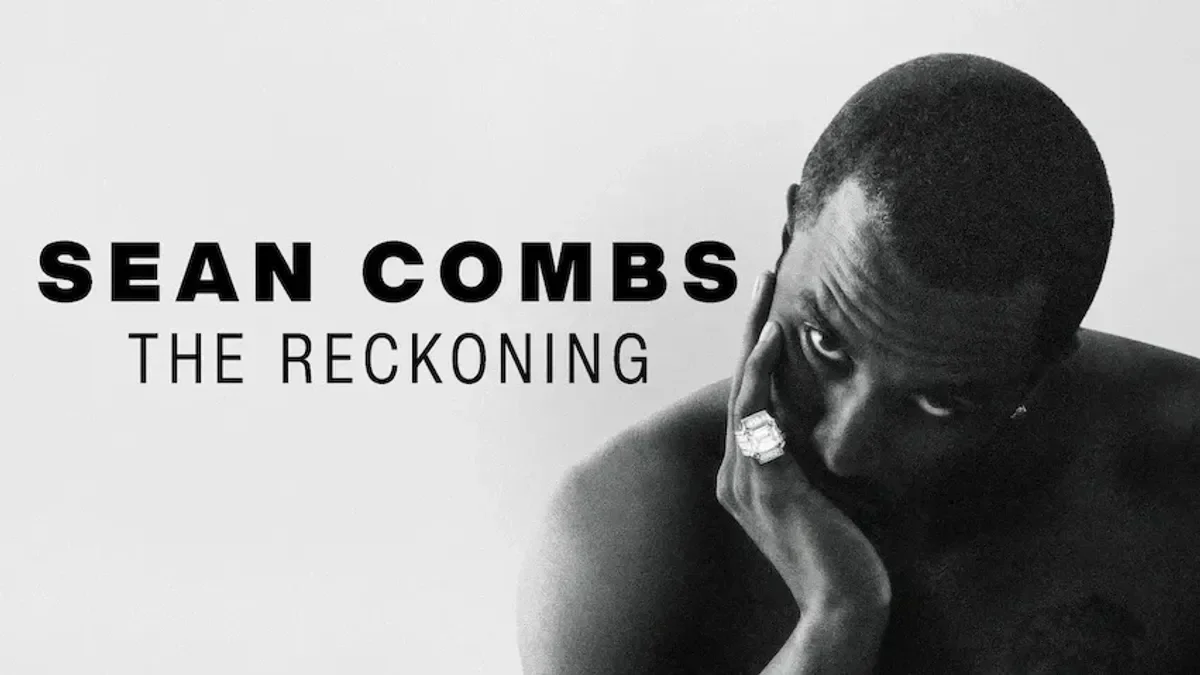
The recent documentary produced by 50 Cent didn’t just revisit the rise and fall of a cultural icon. It pulled back a curtain many of us didn’t even realize we were staring at for decades.
Watching it, I was reminded of The Wizard of Oz , not because of villains or heroes, but because of illusion. Smoke. Sound. And a voice that once felt larger than life, until you start asking what was really there.
The illusion of greatness and the moment the spell breaks
If you had asked me fifteen, maybe twenty years ago who inspired me, I wouldn’t have hesitated. I would have said P. Diddy.
A Black man who built an empire. A master of vision, music, culture. Someone who seemed to open doors for artists who looked like him, sounded like him, dreamed like him. Someone who worked with the greatest. Someone who looked like proof that anything was possible.
At least, that’s what I believed. And I wasn’t alone.
Because back then, many of us were standing in Emerald City, staring at the glow, convinced we were witnessing magic.
The magician everyone applauded
What Diddy truly mastered was not music. It was perception.
He understood something fundamental about the world: people don’t follow truth, they follow image. He didn’t just sell records. He sold belief. He sold aspiration. He sold proximity to power.
He was a marketing magician.
Every move felt larger than life. Every appearance curated. Every narrative tightly controlled. He wasn’t just in the room. He was the room.
And like the Wizard of Oz, his power didn’t come from what he created, but from what others believed he could create for them.
The spell of admiration
This is where the illusion deepens. There are two kinds of leaders in this world: those who want to inspire, and those who want to be admired.
Inspiration multiplies. Admiration concentrates.
For a long time, it looked like Diddy was inspiring a generation. But when you zoom out, a quieter truth emerges: in the end, the only person he consistently made successful was himself.
Look closely.
Where are the artists who truly rose into sovereignty? Where are the legacies that flourished without struggle, silence, or dispute? Where is the ecosystem of empowered successors?
What remains instead is a trail of artists who were broken, buried, blocked, or endlessly fighting for credit, ownership, or payment. People who gave their light, their youth, their loyalty, and walked away empty-handed.
That’s not inspiration. That’s extraction.
Behind the curtain
In The Wizard of Oz, the turning point is not dramatic. It’s quiet. Almost accidental. A small movement, a curtain pulled aside. And suddenly, the booming voice disappears. The fire fades. The illusion collapses.
What’s revealed is not a monster, but something more unsettling: emptiness. Behind all the greatness, there is dust.
That’s the moment many of us are having now. Not just with Diddy, but with power itself. We’re beginning to see that some empires were never built on substance, but on smoke, fear, entitlement, and borrowed light.
The Wizard never gave courage. He never gave heart. He never gave wisdom. He only convinced others he owned it.
Why control was everything
When someone builds power on illusion, they become terrified of real light.
That’s why control becomes essential.
Control of narrative.
Control of loyalty.
Control of bodies, relationships, attention.
Control of who shines and who doesn’t.
Anyone who threatens the illusion by standing too tall, glowing too freely, or refusing to bow becomes a problem. And when admiration-based power feels threatened, its aura changes. Charm hardens. Warmth disappears. What’s left is something cold and punishing.
Not because the other person did something wrong. But because the wizard was reminded he is not a god.
The dark psychology and frequency trap behind the illusion
What the documentary hints at, but never fully names, is that this wasn’t only psychological control. It was frequency trapping. A closed loop engineered to keep people suspended in fear, hope, shame, and confusion.
The illusion of greatness functioned like a broadcast tower, pulling others into its signal, then slowly lowering their vibration until leaving felt impossible.
Promises created hope. Hope created patience. Patience turned into self-doubt. Self-doubt collapsed into despair. And despair became the cage.
This is how admiration-based power feeds. Not by lifting others up, but by keeping them emotionally exhausted, spiritually disoriented, and energetically dependent.
Once trapped in the loop, force was no longer necessary. People began policing themselves, afraid to lose access, terrified of becoming nothing without the wizard’s approval. The system didn’t need bars. It needed belief.
And belief, once weaponized, becomes the most efficient prison of all.
A pattern bigger than one man
This isn’t about one celebrity. This is about illusion leadership everywhere.
In corporations. In governments. In boardrooms and institutions. In families and relationships.
Many people in power didn’t rise through mastery or integrity, but through performance. Through intimidation disguised as authority. Through charisma mistaken for character.
And that era is ending.
You can feel it.
The world is no longer impressed by noise without substance. Planet Earth is rejecting domination built on fear, entitlement, and illusion.
In this closing cycle, the curtain is being pulled back again and again. Not violently. But unmistakably.
The awakening
What this story taught me is simple, and personal:
I wasn’t wrong for believing. I was just under a spell. And spells break when awareness arrives.
If you are talented, ambitious, visionary, if you carry light that others feel the moment you enter a room, this matters for you. Because illusion leaders are drawn to people like you.
They don’t want to grow you. They want to use you. So listen to your intuition. Early. Quietly. Without needing proof.
The moment something feels off. The moment admiration replaces encouragement. The moment loyalty is demanded instead of earned. That’s the curtain moving.
And once you’ve seen behind it, you never mistake smoke for magic again.
Love,
Mara
